
National Historic Districts Archives – One for the Money Two for the Road
Featured 
This is the story of a national park that was, then wasn’t. We visited Chickasaw National Recreation Area because we wanted to see what remained of a national park that once was one of the most visited in the United States. In fact, the park attracted visitors to southern Oklahoma before Oklahoma was even an official state!
 Family at the park – probably early 1900s.
Our guess is that most people who visit the park today don’t pay much attention to the park that was. Most of today’s visitors are likely there to enjoy the camping and water sport opportunities that the new park offers. Interestingly, the park has always been about water, but not in the ways most people would think. Enjoy the journey as we explore the historic place that was once Platt National Park.
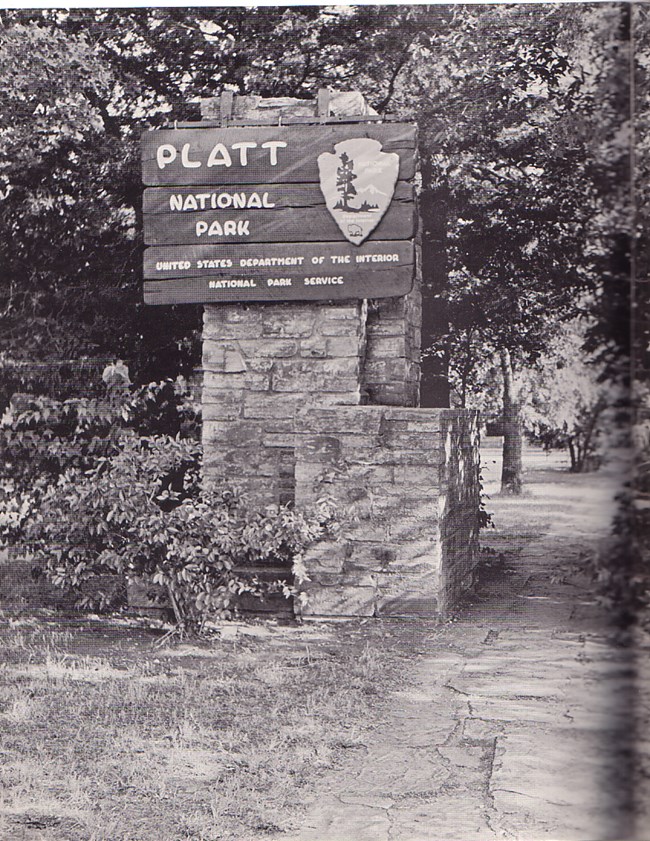
Birth of a Park
According to the National Park Service: Between the 1830 Indian Removal Act and 1850, the U.S. government used forced treaties and/or U.S. Army action to move about 100,000 American Indians living east of the Mississippi River, westward to Indian Territory in what is now Oklahoma. Among the relocated tribes were the Cherokee, Choctaw, Chickasaw, Creek, and Seminole.
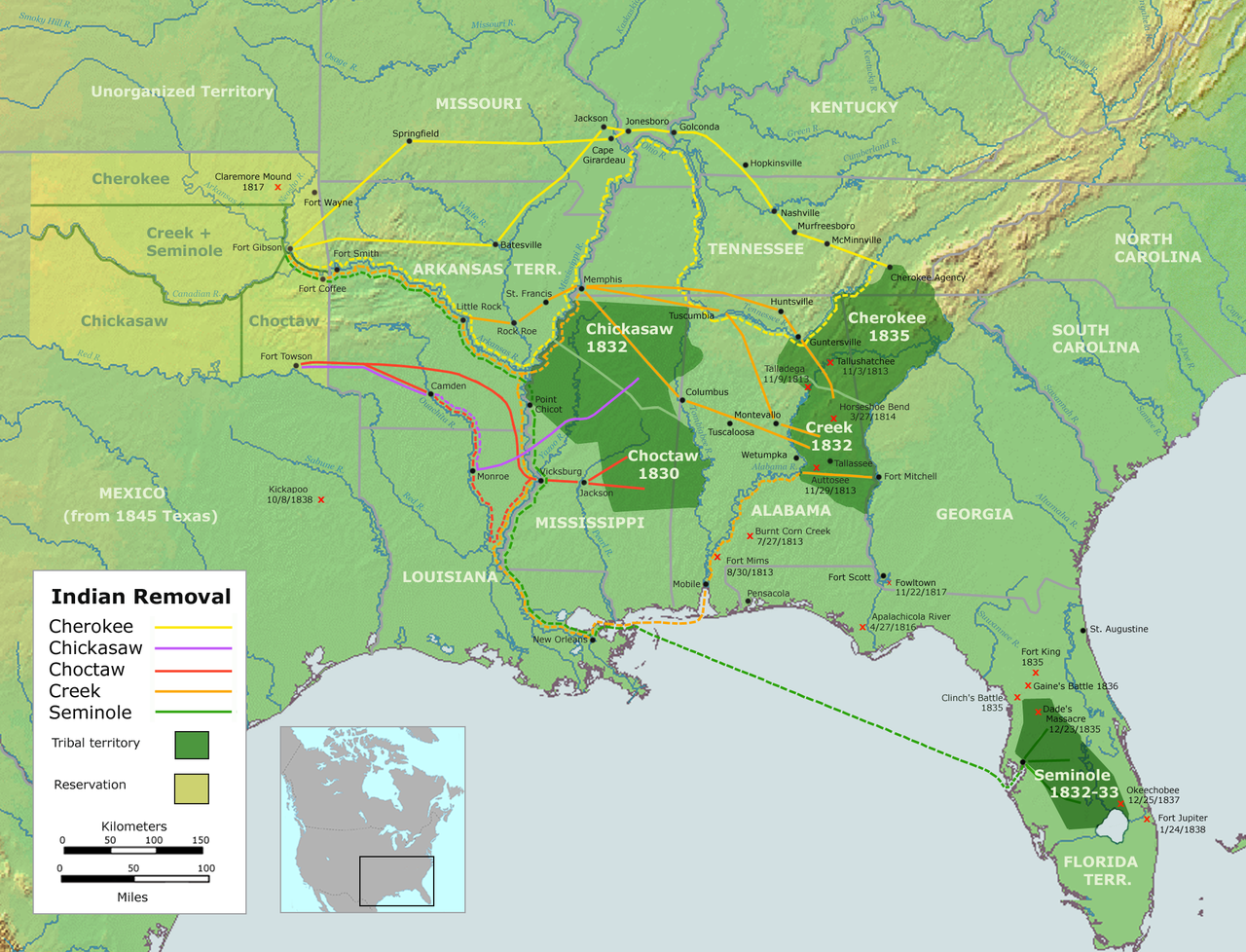 Trail of Tears map. (Wikipedia)
The trails the tribes followed are collectively called the Trail of Tears. Chickasaw and Choctaw settled on the same land grant in the southern third of Indian Territory but later agreed with the government to split the land between the two nations. Lands acquired by the Chickasaw Nation included the area that would later become Platt National Park.
1924 postcard
Fearing uncontrolled use of their lands’ mineral and freshwater springs, both the Choctaw and Chickasaw Nations sold 32 springs along with 640 acres of land to the Department of the Interior for protection in 1902. The site was initially named Sulphur Springs Reservation, however, four years later the name was changed to Platt National Park.
1939 Guidebook
Platt Historic District
Platt National Park was the seventh U.S. national park and was named after the late Connecticut Senator Orville Platt who had supported legislation to protect the springs located on the land. In 1914, the park, which was then the smallest of all national parks, attracted more visitors than Yellowstone and Yosemite National Parks.
 Fountain at the original entrance to the park built by the Civilian Conservation Corps (CCC) in the 1930s.
  Bromide Pavilion, also built by the CCC in the mid-1930s, was a place for visitors to collect water piped in from Bromide Spring until it quit flowing in the 1970s. Today it is still a beautiful building.
  1930s comfort station. Now modernized, the structure has withstood the test of time.
Pavilion Springs
 Sulphur Springs Pavilion, circa 1902.
Much to the Chickasaw and Choctaw people’s dissatisfaction, visitors flocked to the springs because they believed the mineral waters held healing powers. Resorts such as the one above and others that popped up around the springs brought about the sale of the springs and surrounding lands to the government.
 Renamed Pavilion Springs because of several different pavilions built over them through the years, this photo shows a newer, smaller pavilion. Circa 1904.
  This pavilion was built by the CCC in the 1930s and still covers Pavilion Springs today.
  Pavilion Springs continue to flow. The sign in the background shows the concentrations of minerals in the water.
Travertine Nature Center
Built in 1969, the Travertine Nature Center was the last major improvement project of Platt National Park. The building was designed to reflect the architectural style of renowned American architect Frank Lloyd Wright while keeping the National Park Service Rustic look of the park’s other structures.
The Travertine Nature Center serves as a visitor center in the park, and while it is a newer building it is considered part of the Platt Historic District. Its features include dioramas depicting the park’s wildlife as well as live exhibits of fish and amphibians. Visitors to the center can pick up park brochures, buy a souvenir in the bookstore, and talk with rangers about the park.
 Diorama in the nature center. Foxes, deer, and many other animals can be found in the park.
  We think this guy may be a bluegill which is found in the lakes at the park. Whatever he is, he looks kind of grumpy.
  Travertine Creek flows beneath the nature center – very Frank Lloyd Wright-ish!
And speaking of history, how long has it been since you’ve seen one of these?
 It’s in a little alcove on the outside of the Travertine Nature Center. It doesn’t work anymore, but it was a step back in time to see a pay phone.
Little Niagara
A longtime favorite swimming area for visitors, Little Niagara is a small cascade on Travertine Creek and is just a short walk from the nature center. Improvements at the Little Niagara area, including a dam to create the swimming hole, were also done by the CCC in the 1930s.
 Little Niagara
  People have enjoyed the waters of Travertine Creek and Little Niagara for many years. This photo is probably from the early 1900s.
Lincoln Bridge
Lincoln Bridge, which replaced an old wooden bridge, was the first improvement project of Platt National Park. Amid much fanfare, the bridge was dedicated on February 12, 1909, in honor of President Abraham Lincoln’s 100th birthday and re-dedicated on the same day in 2009 to celebrate its own centennial.
 Approaching Lincoln Bridge
Forrest Townsend, who was the first full-time ranger at Platt National Park, designed Lincoln Bridge. Constructed of limestone, the bridge is 120 feet long and 20 feet wide. Four crenelated (notched) towers form the abutments with steps and a flagpole on each one.
 View of Travertine Creek from Lincoln Bridge
Lincoln Bridge has long been a favorite scenic spot in the park. We found it to be our favorite too.
Trivia: In 2011, as part of the America the Beautiful Quarters Series, the U.S. Mint issued a quarter featuring Chickasaw National Recreation Area and the Lincoln Bridge.
 Lincoln Bridge
In 1976, Platt National Park was abolished by congress and combined with the Arbuckle Recreation Area to form Chickasaw National Recreation Area. We haven’t covered all of the features of the Platt Historic District here, but we feel fortunate to have seen them. Thankfully the National Park Service has done a great job of preserving Platt National Park’s history.
 Little waterfall on Travertine Creek
Where is it?
Chickasaw National Recreation Area is located near the town of Sulfur in southern Oklahoma about 13 miles east of I-35 and the town of Davis. The park’s main visitor center and administration office is located at 901 West 1st Street, Sulfur, Oklahoma. Features of the park include:
- Travertine Nature Center – exhibits, park information, bookstore
- Platt Historic District
- Six campgrounds – some require reservations.
- Veteran’s Lake – hiking, fishing, picnicking
- Lake of the Arbuckles – boating, fishing, camping, fishing, hunting, swimming, picnicking
- Hiking
- Biking
- Bison pasture
- Scenic drives
- Ranger-led programs
- Free admission
Access the park’s website here. 
Thank you so much for joining us!
Want to visit some other amazing national parks? Try these:
Mammoth Cave National Park
Rocky Mountain National Park
Yellowstone National Park
Happy, safe travels, y’all!
Mike and Kellye

As always, we strive to be as accurate with our information as possible. If we made a mistake, it was unintentional. (Hey, we’re only human!) Our suggestions are for places that we’ve heard good things about but haven’t visited personally, and our opinions are our own.
©2023
Featured 
Today we’re taking a random places road trip, and we are so happy to have you along for the ride. Enjoy!
 Pike Place Market, Seattle. Established in 1907, it is the oldest running farmer’s market in the U.S. The original Starbucks opened here in 1971.
  The Green Monster left field wall at Fenway Park, Boston. The reason the wall is there? To keep people from watching the game for free. In 2003, 269 barstool seats and 100 standing room only spaces were added to the deck on the wall, however tickets for those seats are hard to come by. By the way, the scoreboard on the Green Monster is still updated by hand. Fenway Park has been the home of the Boston Red Sox since 1912.
  Smokey Bear’s gravesite, Capitan, New Mexico. The idea of a fire prevention mascot was conceived in 1944 when the National Forest Service came up with a character called Smokey Bear. In 1950, a black bear cub was found badly burned after a forest fire in the Capitan Mountains of the Lincoln National Forest. The firefighters who found him named him Smokey. A popular living symbol of fire prevention, Smokey made his home at the National Zoo in Washington, D.C. until he died in 1976. He was returned to Capitan where he was buried in what is now Smokey Bear Historical Park.
  Ernest Tubb Record Shop, Nashville. Home of the Midnite Jamboree, which started right after the Grand Ole Opry show was over on Saturday nights. Ernest helped many artists get their start right there in that store until 1974 when the show was moved to another venue. The Midnite Jamboree was moved back to the store in 2021. Tubb was born in Texas, 35 miles south of Dallas. He performed and wrote songs up until his health required him to quit in 1982. He died in 1984. In March 2022, it was announced that the store is being sold and the Midnite Jamboree would be ending.
  Geographic Center of the U.S. The actual survey marker is 22 miles north of town, but Belle Fourche, South Dakota does a great job of letting people know it’s close by.
  UFO Museum and Research Center, Roswell, New Mexico. Occupying a 1930s era movie theater, the museum was opened in 1991. In addition to the exhibits, mostly about the so-called Roswell incident, they also have a gift shop that carries things like bumper stickers that say, “I Like Aliens, They Taste Just Like Chicken”, and other gotta-take-one-of-these-home souvenirs.
  Granary Burying Ground, Boston. Established in 1660, Paul Revere, Samuel Adams, and John Hancock are all buried here, along with some of Ben Franklin’s family members and victims of the Boston Massacre, among others. It is estimated that more than 5,000 people are buried in this small cemetery, though there are just over 2,300 markers.
  Buffalo Bill Ranch State Historical Park, Nebraska. Site of Buffalo Bill Cody’s Scout’s Rest Ranch, which was his home from 1886 to 1913. This beautiful barn was built in 1887 to house his purebred stallions and other livestock that lived on the 4,000-acre ranch. His mansion is shown below.
  Buffalo Bill Cody’s home at Scout’s Rest Ranch
  Reflections on the Colorado River, Moab, Utah. Did you know that the Colorado River Basin is part of eleven national parks? The Colorado River also flows through seven states, two Mexican states, and it forms a partial border between Arizona and Mexico.
  Provincetown, Massachusetts. Fleeing religious persecution in England, the Pilgrims on the Mayflower landed first at Provincetown in 1620 where the men on the ship signed the Mayflower Compact. The compact was a document whereby they agreed to self-rule the colony they were set to establish in the New World. After finding no fresh water in the area, they sailed across the bay to Plymouth, and the rest, they say, is history.
  The Stanley Hotel, Estes Park, Colorado. Freelan O. Stanley, inventor of the Stanley Steamer automobile, opened the hotel in 1909. In the 1970s Stephen King visited the hotel and was inspired to write his novel The Shining. Today, the Stanley Hotel claims to be one of the most haunted hotels in the country with none other than Freelan and his wife, Flora (among other spirits) roaming the hallways. We toured this stunning hotel, and even went in the basement, but we didn’t see any paranormal activity – or Jack Nicholson!
That’s going to do it for today. Thanks so much for joining us on our random places road trip. We hope you will return to our site again for more sights, scenery, trips, tricks, and tips. Be sure to sign up to be an e-mail follower so you never miss a post, and follow us on Facebook, Pinterest, and Twitter. Tell your friends! We want to be friends with them, too.
Happy hump day, everybody!

As always, we strive to be as accurate with our information as possible. If we made a mistake, it was unintentional. (Hey, we’re only human!) We aren’t paid for our recommendations, and we only recommend our own tried and true vendors and venues. Our suggestions are for places that we’ve heard good things about but haven’t visited personally, and our opinions are our own.
©2022
Featured 

Located just outside of Sharpsburg, Maryland, Antietam National Battlefield was one of our favorite destinations on our Mid-Atlantic road trip. During the battle that took place on September 17, 1862 and lasted only about 12 hours, 23,000 men’s lives were changed forever. Ending in a Union victory, it was the bloodiest one day battle of the Civil War.
 Maryland Monument
  Dunker Church so named because their parishioners were baptized by dunking
  Miller Farmhouse
The men who lost their lives here did not in any way die in vain, but when one steps foot on these consecrated grounds it is hard not to think that any war has its own senselessness. We felt something spiritual here that resembled the way we felt at the Oklahoma City Memorial – both being places that were once violently disrupted by turmoil but are now utterly serene. Perhaps the spirits of those who fought and died here walked along with us and somehow soothed our souls.
 Mumma Farm, the only structure deliberately destroyed during the battle. Confederate soldiers burned the house and outbuildings so Union troops could not use them. Luckily, the Mumma family had left the house before the battle. They rebuilt the house in 1863. Before this trip, we never knew that families whose properties were damaged or destroyed during the Civil War were compensated by the government in order to rebuild.
  Hallowed Ground
Another thing we learned on the trip was that the National Park Service leases some of its land to local farmers for growing crops. We never had seen so many soybeans, and certainly never knew that so many acres of soybeans were grown in the US.
 Sunken Road aka Bloody Lane looking north
  Bloody Lane looking south
This is the site where the Confederates held off 10,000 Union soldiers during a three hour battle. The casualties were high and the road was lined with bodies. Click here for some additional information and photographs of the aftermath of this battle thanks to the History Channel: https://www.history.com/news/battle-antietam-photography-civil-war . Warning – the photographs are graphic!
 Burnside Bridge – probably the most photographed landmark at Antietam. General Burnside’s men captured the bridge from about 500 Confederate soldiers who had held the area for more than three hours. Burnside’s troops crossed Antietam Creek, which drove the Confederates back toward Sharpsburg.
The Antietam National Cemetery is located in Sharpsburg, Maryland, just a few miles from the battlefield. Unfortunately, we didn’t get to go in, but according the the park brochure 4,776 Union soldiers are buried here, along with veterans of other wars. This cemetery did not exist at the time of the Civil War so the dead were buried where they died on the battlefield. Later their remains were reinterred at this cemetery. Confederate soldiers were buried in Hagerstown, MD, Frederick, MD, and Shepherdstown, VA, now WV. Interestingly, in 2009 remains of an unidentified soldier were found in a cornfield, most likely buried where he fell on the battlefield almost 150 years before.
 Cemetery Lodge (sometimes called Keepers House) on the grounds of the Antietam National Cemetery
That’s going to do it for our overview of the Antietam National Battlefield. We hope you enjoyed the visit and that you will come back often to see us as we post more trips and tips. Thank you for joining us on the road. Until next time…
Travel safe, travel smart, and we will see you down the road.

As always, we strive to be as accurate with our information as possible. If we made a mistake, it was unintentional. (Hey, we’re only human!) We aren’t paid for our recommendations, and we only recommend our own tried and true vendors and venues. Our suggestions are for places that we’ve heard good things about but haven’t visited personally, and our opinions are our own.
©2021
Featured 

The town of Harpers Ferry is a national park located (now) in the state of West Virginia, but it also borders the states of Maryland and Virginia. The town once had an armory (established by George Washington to build muskets), a cotton mill among other important manufacturing sites, and a college. It is also the site of the 1862 Civil War Battle of Harpers Ferry, when the town was in the state of Virginia.
Here visitors can hike a section of the Appalachian Trail, walk the C & O Canal towpath (part of the Appalachian Trail), or enjoy several other hiking trails. There are also outfitters nearby that can put you on a river if water sports are your thing. Several museums and other points of interest are located along Potomac and High Streets in the lower town.
 The Appalachian Trail winds its way from Maryland Heights across the Potomac River and through Harpers Ferry
  Peaceful path to Virginius Island
The Point is where two rivers converge. This is a popular place in the park. It is interesting to see the water of the Potomac blend with the water of the Shenandoah where they meet at the center of the image.
 The forest green water of the Potomac (foreground) flows into the olive green Shenandoah (background)
  Along the bank of the Shenandoah
When visiting Harpers Ferry, guests can park at the visitor center then board a free shuttle to take them to the lower town. A hiking trail leads to the lower town for those who would rather walk. There are many historic buildings to see and there are also shops and restaurants. Although it is a national park, Harpers Ferry does have residents.
 High Street
  Along Shenandoah Street
  Saint Peter’s Roman Catholic Church
John Brown was a staunch abolitionist. In 1859, he organized a raid on Harpers Ferry. The rebellion, which was intended to arm enslaved men by seizing the armory, was a failure. After a thirty-six hour standoff, Brown and his men were killed or captured by a group of US Marines led by Robert E. Lee. Brown was later found guilty of treason, inciting a riot, and conspiracy. His trial and subsequent hanging took place in Charles Town, Virginia, now West Virginia.
 John Brown’s Fort was originally the firehouse for the armory in Harpers Ferry. It is now referred to as John Brown’s Fort because it is where he and his men barricaded themselves during the final hours of their raid before being captured.
 This and the photo above were taken at the National Civil War Museum in Harrisburg, Pennsylvania
It is reported that Brown wrote this on the wall of his cell just before being hanged: “I, John Brown, am now quite certain that the crimes of this guilty land will never be purged away but with blood.”
 The Harpers Ferry train tunnel is actually on the Maryland side of the Potomac River
  Remains of a B & O Railroad bridge which spanned the Potomac River at Harpers Ferry. While these piers are newer, railroad bridges here were destroyed and rebuilt nine times during the Civil War, however, five of those times the bridges were destroyed by floods.
  Shenandoah Bridge near The Point at Harpers Ferry. The bridge was originally constructed in 1882. It was destroyed by a flood in 1889 and rebuilt. These piers are all that remain after another major flood destroyed the bridge in 1936.
  Ruins along Virginius Island Trail
  Train trestle currently used by Amtrak and a commuter train service
We’re going to wrap up our visit to Harpers Ferry here. Thanks so much for joining us on the road. We hope you will come back again to enjoy more of our Mid-Atlantic road trip. Until next time…
Travel safe, travel smart, and we will see you down the road.

As always, we strive to be as accurate with our information as possible. If we made a mistake, it was unintentional. (Hey, we’re only human!) We aren’t paid for our recommendations, and we only recommend our own tried and true vendors and venues. Our suggestions are for places that we’ve heard good things about but haven’t visited personally, and our opinions are our own.
©2021
Featured 

 The Maryland State House in Annapolis
We strolled a few streets of Annapolis, and went to the City Dock which was great – we ate some good barbecue there – but parking came at a premium and there were lots and lots of people. Being Covid-conscious, although we’ve been vaccinated, we weren’t real keen on big crowds. It was fun, though, and we would go back in a heartbeat to see more of the city.
 A shot from City Dock. Luckily, we were able to park after feeding a meter our credit card, and we were just steps from the pedestrian entrance to the Academy and visitor center.
We went to Annapolis because it is the capital of Maryland, but our primary goal was to see the US Naval Academy. Now we wish we would have allowed more time to visit there. Honestly, we could’ve spent days touring the Academy.

 Prestigious homes on Porter Road, sometimes called Captain’s Row. These beautiful houses, built in 1905, are for higher ranked essential personnel to live in while stationed at the Academy.
  The Chapel, dedicated in 1908. John Paul Jones’ remains were entombed here in 1913. His remains had been returned to the US in 1905 after being found buried in a cemetery in France where he had lain for 113 years. Seeing the Chapel was the highlight of our visit.
  Mahan Hall Clock Tower framed by stunning crepe myrtles
  Bancroft Hall, the largest dormitory in the US, is home away from home to some 4,000 midshipmen. The building has 1700 rooms, 33 acres of floor space, and almost five miles of hallways/corridors. Noon meal formations are held in front of this building during the academic year.
  Tamanend, Chief of the Delaware Indians. Chief Tamanend, now called Tecumseh sits in Tecumseh Court (T-Court to the midshipmen) in front of Bancroft Hall where the noon meal formations take place. The original of this sculpture was the figurehead of the USS Delaware which was burned during the Civil War. The figurehead was saved, however, and ended up at the Academy in 1866. This bronze, cast from the original wooden carving, was completed in 1930.
If you plan to visit the Academy, be prepared to go through a security process similar to ones at airports, and you will be asked to show a valid photo ID. No weapons of any kind are allowed to be carried onto the campus. Self-guided and guided tours are available.
As we said, we could have spent days here, and maybe someday we will return, as the Academy was definitely one of the highlights of our trip. For more information about the United States Naval Academy and its history, click here: https://www.usna.edu/homepage.php then click on the “About” tab.
And for some interesting tidbits about the navy, click here: https://www.history.com/news/7-things-you-may-not-know-about-the-u-s-navy
We’re going to leave you with the navy mascot, Bill the Goat:


Thanks so much for joining us on our journey! Please join us again soon. We really appreciate comments, likes, and follows. Until next time…
Travel safe, travel smart, and we will see you down the road (or at a national park!)

As always, we strive to be as accurate with our information as possible. If we made a mistake, it was unintentional. (Hey, we’re only human!) We aren’t paid for our recommendations, and we only recommend our own tried and true vendors and venues. Our suggestions are for places that we’ve heard good things about but haven’t visited personally, and our opinions are our own.
©2021
Featured 

Established in 1651 by Dutch settlers, the town of New Castle sits on the banks of the Delaware River. The historic district has been designated a National Landmark. We chose to visit because it is part of the First State National Historical Park, which has several sites between the northern border and Dover. We arrived on a weekday and basically had the historic district to ourselves. Fall was in the air, and it turned out to be a perfect day to stroll the cobblestone streets and learn about the history of the state.
 The historic New Castle Courthouse was built in 1732 and served as the first court and state capitol of Delaware. It was here in 1776 that documents were signed declaring three counties independent from England and Pennsylvania, making Delaware the first state. The capital was moved to Dover in 1777. This building is a National Historic Landmark as well as a National Historic Underground Railroad Site.
 Part of The Green
  Immanuel Episcopal Church on the Green, established in 1689 and built in 1703
  Cemetery of Immanuel Episcopal Church on the Green.
  One of the buildings along the main thoroughfare, Delaware Street. An upper apartment is now an Airbnb
  Old library, now a museum. What an interesting building!
  This building once served as the sheriff’s house, and until 1911 a prison stood next to the structure. In the photo below, the words “county prison” can still be seen where they are embedded in the sidewalk.
 William Penn. In 1680, New Castle was transferred to him by the Duke of York. Charles Calvert, 3rd Baron Baltimore, who had established the colony of Maryland, disputed the transfer and the property lines. The dispute went on for decades but was settled when the survey was done by Mason and Dixon and the Mason-Dixon Line was established between Delaware and Maryland. Also, Delaware is the only state that has an arc for a border line. The arc was determined by a 12 mile radius using the cupola on top of the New Castle Courthouse as the center point.
 View from the waterfront: Delaware Memorial Bridge crossing the Delaware River into New Jersey
  Another slice of New Castle history along the edge of the Delaware River.
  This container ship happened by while we were at the river.
We’re going to wrap up here, but in closing we will leave you with a photo of the Delaware Legislative Hall which is the state capitol building.

Thank you for joining us on the road. We hope that you will keep coming back for more great road trips and perhaps a tip or two. Until then…
Travel safe, travel smart, and we will see you down the road!
As always, we strive to be as accurate with our information as possible. If we made a mistake, it was unintentional. (Hey, we’re only human!) We aren’t paid for our recommendations, and we only recommend our own tried and true vendors and venues. Our suggestions are for places that we’ve heard good things about but haven’t visited personally, and our opinions are our own.
©2022
Featured 
Gettysburg has a lot to see and do, and honestly we should have stayed for more than a day. We spent two hours viewing the introductory film, seeing the cyclorama, and seeing the museum. All three are covered in a $15.00 fee at the visitor center. Otherwise, the park is free to visit. The auto tour took another three hours. We hiked one trail near Little Round Top and then walked the entire National Cemetery Trail. In all, we probably spent six to seven hours in the park. If you have never been to Gettysburg, you need to know that the park is surrounded by the town where traffic is heavy and parking is almost non-existent. Downtown Gettysburg is fun and has lots of shops and restaurants, but be prepared to feed a parking meter if you go.
Restaurant recommendations:
Tommy’s Pizza – great for lunch.
The Gettysburger was worth the hour-long wait for a table for dinner. The food was great and the service was excellent. They even have a dog menu if you want to have your fur baby join you on their patio! We highly recommend making a reservation.

The auto tour is 24 miles long and can be self-guided or many types of guided tours are available. We chose to do the self guided tour which is easy using the information provided in the park brochure. The tour is well marked with signs so it is easy to follow. We did not stop at every memorial or monument, however, we did stop at all sixteen points of interest described in the brochure.
 Eternal Light Peace Memorial – “Peace Eternal in a Nation United”
  The Virginia Memorial
  State of Pennsylvania Monument
  Church at the Lutheran Theological Seminary – Seminary Ridge
The National Cemetery is a a somber and extremely beautiful place. While driving through the battlefields, you can’t help but think about what took place there and the lives that were ended or changed forever on those hallowed grounds, but walking through the cemetery really brings it home.


 The Soldiers National Memorial at Gettysburg National Cemetery sits on the site of President Lincoln’s Gettysburg Address
The Gettysburg Cyclorama, which is 377 feet long and 42 feet high, is a stunning depiction of the final Confederate assault on July 3, 1863. The painting, one of the largest in the world, was done by Paul Philippoteaux in the 1880s. The building that houses the cyclorama provides special lighting and sound effects that seemingly place the viewer in the midst of the battle. The narrator does an excellent job of pointing out the landmarks and explaining how the battle took place. Seeing this before we took the auto tour really helped us to know what we were looking at. Some of our photos are below, and here is a link to the National Park Service website which has the history of the cyclorama, videos, and additional photos: https://www.nps.gov/gett/planyourvisit/cyclorama.htm


 This is a close-up of the photo above. Look closely at the man being carried. It’s a little Easter egg that Philippoteaux added to his masterpiece. Do you see that the man is Abraham Lincoln? They also said that Philippoteaux portrayed himself somewhere in the painting too, but we didn’t find him.

So much to see and learn in this museum! It is a definite must-do prior to taking the auto tour. We were particularly interested in the many flags that are on display. Below are a couple of the exhibits.


We’re going to close this post with one last picture from the auto tour. Please come back often to see more of our latest trip. Better yet, become an e-mail follower so you will be notified every time we post. We will not sell to or share your information with anyone.
 The beautiful State of Vermont Monument
Thanks so much for riding along with us. Until next time…
Travel safe, travel smart, and we will see you down the road!
As always, we strive to be as accurate with our information as possible. If we made a mistake, it was unintentional. (Hey, we’re only human!) We aren’t paid for our recommendations, and we only recommend our own tried and true vendors and venues. Our suggestions are for places that we’ve heard good things about but haven’t visited personally, and our opinions are our own.
©2021
Featured 

Covid threw us (and everyone else) for a loop, but after a too-long hiatus, a lot of research, and many hours of soul searching, we decided to mask up, pack our hand sanitizer, and get back to business. We are thrilled to share our 1200 mile, five state Mid-Atlantic road trip with you over the next weeks and months, so buckle up and enjoy the ride.

Our trip began and ended in Baltimore, MD because…well, Southwest flies there. We try to always fly Southwest if possible – gotta love those points! Plus, Baltimore was a perfect central location for everything we wanted to do and see. What we didn’t expect was the heavy traffic. (Wilmington and Baltimore, we’re looking at you!) For a couple of folks from the wide open spaces of West Texas, we weren’t used to taking two and a half hours to go 68 miles. That said, the trip was great and the bumper to bumper traffic in some areas just added to the adventure.
 Here’s our cute Kia Sorrento rental car.
Our very first stop on the trip was at Catoctin Mountain Park in Maryland. It is a free entrance national park site that includes a scenic drive, hiking trails, campgrounds, picnic areas, streams, fishing, rock climbing, and cross country skiing in the winter, and it abuts Cunningham Falls State Park, which is the site of the highest waterfall in Maryland. You may not have heard of Catoctin Mountain Park, but we bet you’ve heard of Camp David. The presidential retreat established by Dwight D. Eisenhower and named after his grandson is located in Catoctin Mountain Park. Camp David is not accessible to the public and its location is apparently kept very secretive. We happened to see what we believed to be the entrance because it had official looking gates with signs that prohibited parking, standing, and picture taking.

 Oh, the beauty, the delightful bird calls and the earthy smells of the forest. We love a good trail, and this one didn’t disappoint.
  Pastoral Catoctin Mountains farm scene from the overlook at the end of the trail
Here’s a handy link to Catoctin Mountain Park for more information: Catoctin Mountain Park
We didn’t have this stop on our itinerary, but it was on the way to Gettysburg so we took a chance. What a great place to see! The National Shrine Grotto of Our Lady of Lourdes is on the campus of Mount Saint Mary’s University in Emmitsburg, Maryland. The grounds, walking paths, and gardens are beautiful. We got to witness a pilgrimage to the Grotto while we were there, which was an exciting first for us. That is why there are no pictures of the actual Grotto, but below are some shots from in and around the area. While viewing the pictures, imagine walking through a serene garden setting on a mountain top while a carillon rings out “How Great Thou Art”.
 Chapel
  Reflecting Pool
  Beautiful Jesus
  Saint Anthony Shrine (dedicated in 1859) near the National Shrine Grotto in Emmitsburg
Here is the link to The National Shrine Grotto if you would like additional information: Saint Anthony Shrine
Also in Emmitsburg, MD, is the National Shrine of Saint Elizabeth Ann Seton. Born in 1774, she was the first American to be canonized by the Roman Catholic Church.

 Shrine and Basillica
Also of interest in Emmitsburg is the National Fallen Firefighters Memorial which is located just down the street from the Seton Shrine.
Here is the link to The National Shrine of Saint Elizabeth Ann Seton: Seton Shrine
Here is the link to the National Fallen Firefighters Memorial: Fallen Firefighters
That is all we have for this post. You won’t want to miss our next exciting destination, Gettysburg. We appreciate you for visiting our site and riding along with us on our adventures. We would love to hear from you, so feel free to leave a comment. Until next time…
Travel safe, travel smart, and we will see you down the road.
As always, we strive to be as accurate with our information as possible. If we made a mistake, it was unintentional. (Hey, we’re only human!) We aren’t paid for our recommendations, and we only recommend our own tried and true vendors and venues. Our suggestions are for places that we’ve heard good things about but haven’t visited personally, and our opinions are our own.
©2021
Featured  Serene setting in the Green Mountains near Woodstock. Everywhere we went in Vermont was just this pretty.
Although, Woodstock, Vermont is a popular tourist destination, it is repeatedly called one of the most beautiful towns in the US, and we agree. It is one of the prettiest towns we have visited. We think it is the quintessential New England town.
 Street view of downtown Woodstock

Visitors should take some time to stroll around downtown. There are great shops selling all kinds of interesting things. We loved F. H. Gillingham & Sons General Store. We are also giving a big shout out to Mon Vert Cafe. They had good service and good sandwiches. The chicken salad was delicious. Give them a try if you’re in Woodstock, and be sure to get a brownie!
 Another street view
Woodstock was first settled in 1768. It soon grew into a thriving community, which took advantage of the Ottauquechee River to power its mills. Other businesses sprang up to sustain the growing town’s economy. At last count, the population of Woodstock was somewhere around 3,000. Many of the residential properties are second homes to people who live in larger cities, such as Boston, which is just a couple of hours away. Did you know that there is a ski area in Woodstock, too? It’s called Suicide Six, and it is touted as one of the best smaller ski areas in Vermont.
 Private residence – white paint with black shutters, so typical of Vermont
  If you have been following our New England posts, you know how we love the pretty churches, and this one didn’t disappoint.
  Another private residence. Federal-style architecture is very popular in New England homes.
Across the road from the Marsh-Billings-Rockefeller National Historic Park in Woodstock lies the Billings Farm & Museum. Once owned by the Frederick H. Billings family, the site is now owned and operated by the Woodstock Foundation, Inc., which was established by Laurance and Mary Rockefeller before they donated their home to the National Park Service.
 Barns and Silos
  Happy Heifers
Billings Farm is a full dairy operation. There is an agriculture museum and gift shop inside the visitor center. The old 1890 farm house and creamery has been restored to its original state and can be toured along with the home’s heirloom garden and apple orchard. In addition to the cows, many other animals call this farm home. Below are pictures of some of the cutest residents.
 Hello, cutie!
  Good afternoon, ladies.
  It’s milking time, girls.
  Having a little snack.
A combination ticket will gain admittance to the Billings Farm & Museum and the Marsh-Billings-Rockefeller National Historic Park for two days. Here’s a website link for additional information: Billings Farm & Museum.
About three miles east of downtown Woodstock is the Taftsville Historic District, a 19th century industrial village that grew up around a metal tool factory established in 1793. Today, the Taftsville Country Store, built in 1840, is a popular tourist stop, as is the Taftsville Bridge, built in 1836.


That is all for this post. We hope you have enjoyed our highlights of Woodstock, Vermont. Be sure to check out our post on the Marsh-Billings-Rockefeller National Historic Park, too. Come back to our site often for more great destinations, road trips, Quick Stops, and some great places to camp. We absolutely love having you along for the ride!
We are going to close with a picture of the Vermont State House in Montpelier, the smallest capital city in the US.
 This State House was first occupied in 1859, after the previous building was lost in a fire. The copper and wood dome wasn’t gilded until the early 20th century. The statue atop the dome is called “Agriculture”, and is based on the Roman goddess of agriculture, Ceres.
Until the next trip…
Travel safe, travel smart, and we will see you down the road.
Mike and Kellye
As always, we strive to be as accurate with our information as possible. If we made a mistake, it was unintentional. (Hey, we’re only human!) We aren’t paid for our recommendations, and we only recommend our own tried and true vendors and venues. Our suggestions are for places that we’ve heard good things about but haven’t visited personally, and our opinions are our own.
©2020
Featured Serene setting in the Green Mountains near Woodstock. Everywhere we went in Vermont was just this pretty.
Although, Woodstock, Vermont is a popular tourist destination, it is repeatedly called one of the most beautiful towns in the US, and we agree. It is one of the prettiest towns we have visited. We think it is the quintessential New England town.
Street view of downtown Woodstock
Visitors should take some time to stroll around downtown. There are great shops selling all kinds of interesting things. We loved F. H. Gillingham & Sons General Store. We are also giving a big shout out to Mon Vert Cafe. They had good service and good sandwiches. The chicken salad was delicious. Give them a try if you’re in Woodstock, and be sure to get a brownie!
Another street view
Woodstock was first settled in 1768. It soon grew into a thriving community, which took advantage of the Ottauquechee River to power its mills. Other businesses sprang up to sustain the growing town’s economy. At last count, the population of Woodstock was somewhere around 3,000. Many of the residential properties are second homes to people who live in larger cities, such as Boston, which is just a couple of hours away. Did you know that there is a ski area in Woodstock, too? It’s called Suicide Six, and it is touted as one of the best smaller ski areas in Vermont.
Private residence – white paint with black shutters, so typical of Vermont If you have been following our New England posts, you know how we love the pretty churches, and this one didn’t disappoint. Another private residence. Federal-style architecture is very popular in New England homes.
Across the road from the Marsh-Billings-Rockefeller National Historic Park in Woodstock lies the Billings Farm & Museum. Once owned by the Frederick H. Billings family, the site is now owned and operated by the Woodstock Foundation, Inc., which was established by Laurance and Mary Rockefeller before they donated their home to the National Park Service.
Barns and Silos Happy Heifers
Billings Farm is a full dairy operation. There is an agriculture museum and gift shop inside the visitor center. The old 1890 farm house and creamery has been restored to its original state and can be toured along with the home’s heirloom garden and apple orchard. In addition to the cows, many other animals call this farm home. Below are pictures of some of the cutest residents.
Hello, cutie! Good afternoon, ladies. It’s milking time, girls. Having a little snack.
A combination ticket will gain admittance to the Billings Farm & Museum and the Marsh-Billings-Rockefeller National Historic Park for two days. Here’s a website link for additional information: Billings Farm & Museum.
About three miles east of downtown Woodstock is the Taftsville Historic District, a 19th century industrial village that grew up around a metal tool factory established in 1793. Today, the Taftsville Country Store, built in 1840, is a popular tourist stop, as is the Taftsville Bridge, built in 1836.
That is all for this post. We hope you have enjoyed our highlights of Woodstock, Vermont. Be sure to check out our post on the Marsh-Billings-Rockefeller National Historic Park, too. Come back to our site often for more great destinations, road trips, Quick Stops, and some great places to camp. We absolutely love having you along for the ride!
We are going to close with a picture of the Vermont State House in Montpelier, the smallest capital city in the US.
This State House was first occupied in 1859, after the previous building was lost in a fire. The copper and wood dome wasn’t gilded until the early 20th century. The statue atop the dome is called “Agriculture”, and is based on the Roman goddess of agriculture, Ceres.
Until the next trip…
Travel safe, travel smart, and we will see you down the road.
Mike and Kellye
As always, we strive to be as accurate with our information as possible. If we made a mistake, it was unintentional. (Hey, we’re only human!) We aren’t paid for our recommendations, and we only recommend our own tried and true vendors and venues. Our suggestions are for places that we’ve heard good things about but haven’t visited personally, and our opinions are our own.
©2020
Archives Select Month September 2023 August 2023 July 2023 June 2023 May 2023 April 2023 March 2023 February 2023 January 2023 December 2022 November 2022 October 2022 September 2022 August 2022 July 2022 June 2022 May 2022 April 2022 March 2022 February 2022 January 2022 December 2021 November 2021 October 2021 January 2021 May 2020 April 2020 March 2020 February 2020 January 2020 December 2019 November 2019 October 2019 September 2019 August 2019 July 2019 May 2019 April 2019 March 2019 February 2019 January 2019 December 2018 November 2018 October 2018 September 2018